 Business License
Rayever Self-developed Erbium Laser — Redefining Minimally Invasive Oral Treatment Experience
With the advancement of technology and the popularization of minimally invasive and conservative treatment concepts, research on erbium lasers in the treatment of hard and soft dental tissues has become increasingly sophisticated. Compared with traditional methods, lasers feature low noise, no vibration and minimal thermal side effects, making them well accepted by children, adolescents and patients with dental phobia. With adjustable energy parameters, erbium lasers can perform tissue cutting and conditioning, achieving selective caries removal, sterilization and other therapeutic effects.
As a domestic benchmark for medical erbium laser sources, Rayever (Chengdu) stands out with its independently developed 2.94μm solid-state erbium lasers, tailor-made for dental and dermatological applications. Its core strengths lie in self-researched pump sources and gain media, delivering high wavelength purity, precise pulse control, high peak power, and long-term stability. Rayever’s erbium laser sources excel in compact design, enabling integration into slim handpieces for flexible clinical use, while maintaining consistent energy output and minimizing power degradation even in humid environments—addressing a key technical pain point of mid-infrared lasers.
The core feature of Erbium-Doped Yttrium Aluminum Garnet (Er:YAG) laser is its wavelength of 2940 nm. This wavelength closely matches the absorption peak of hydroxyapatite crystals—the main component of dental enamel and dentin—and also coincides with the highest absorption peak of water in dental tissues. Water absorption of 2.94μm erbium laser is 200 times that of 2.1μm holmium laser and 10,000 times that of 1.06μm neodymium laser, ensuring ultra-high absorption efficiency in water-rich biological tissues. Healthy enamel is a highly mineralized tissue composed of 85% hydroxyapatite, 3% organic matter and 12% water. Dentin contains fewer minerals, with inorganic substances, organic components and water accounting for approximately 50%, 30% and 20% respectively. Compared with other types of lasers, erbium lasers have low penetration capability. The penetration depth of Er:YAG laser in enamel and dentin is only 5~7 μm. Due to the high absorption coefficient of water for erbium laser, surrounding tissues absorb far less energy. Therefore, erbium laser irradiation causes little thermal damage to adjacent tissues, making it a safe and efficient laser solution.
Erbium lasers exert effects through two mechanisms: thermal effect and thermo-mechanical effect.The thermal effect refers to the process in which water within dental tissues absorbs laser energy and vaporizes at an extremely high temperature. When the internal tissue pressure exceeds the structural tolerance, micro-explosions occur in hard dental tissues, followed by the thermo-mechanical effect. At the moment of energy diffusion, the surrounding mineralized tissues rupture and disintegrate, realizing the cutting of hard dental tissues. After tooth decay occurs, the water content in carious tissues rises significantly. Under laser irradiation, decayed tissues rupture and disintegrate first, thus realizing selective caries removal and maximally preserving healthy tooth structures.
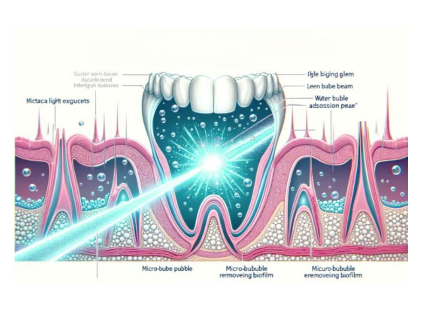
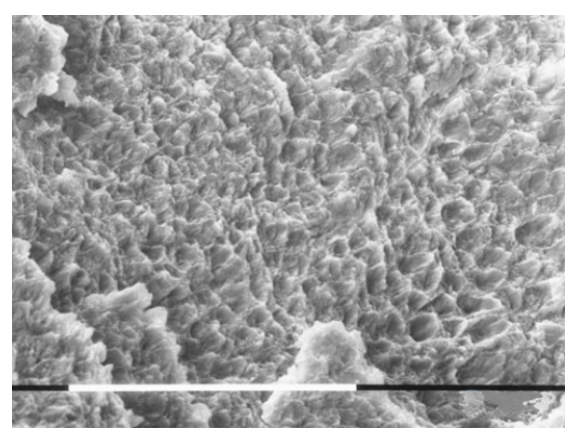
The therapeutic effects of erbium lasers are mainly determined by four key factors: energy output, pulse width, irradiation time and water cooling. The biological effects on dental tissues are divided into tissue cutting and tissue conditioning.Tissue cutting focuses on the removal of carious dental tissues. After erbium laser energy is absorbed by tissues and converted into heat, hard tissue cutting can be achieved once the energy reaches a specific threshold under water spray cooling. Scanning electron microscope (SEM) observations show that traditional erbium laser cutting on enamel relies on micro-explosion rather than dissolution, resulting in a clean, uneven surface covered with pit-like or scale-like structures. Current clinical consensus indicates that the cutting threshold of erbium laser for enamel ranges from 10 to 20 J/cm², and from 2.8 to 14 J/cm² for dentin.
Under the parameter of 5.5 W with 92%/80% air-water ratio, enamel ablation presents a more regular prismatic structure under SEM.Tissue conditioning refers to surface modification of enamel and dentin via low ablation energy (slightly above the cutting threshold). Low-power erbium laser can roughen and clean the enamel surface, forming micro-vesicle structures after treatment. When combined with water spray, low-energy erbium laser is applied to cavity dentin after caries removal. It effectively removes debris and smear layer, eliminates bacteria, reduces thermal response and collagen vaporization, and minimizes dentin damage.
Widely applied in dental treatment, erbium lasers enable precise and minimally invasive tooth preparation with gentle, vibration-free operation, greatly improving patients’ medical experience. Meanwhile, it delivers multiple functions including sterilization, tooth surface conditioning and thermal side effect control. Superior to other lasers in comprehensive performance, erbium laser serves as an ideal alternative to traditional high-speed handpieces, fully practicing the medical philosophy of minimally invasive and conservative dental treatment.
Recently Posted
-
Unlock New Possibilities of 2μm Lasers: Multi-scenario Applications of Rayon Fiber Lasers
May 13, 2026Unlocking New Possibilities of 2μm Lasers: A Multi-Scenario Application Revolution of Rayever Fiber LasersA technology is quietly Read More
 -
Rayever Ho/Cr Solid-State Lasers Unlock New Possibilities for Multi-Scenario Applications
May 11, 2026Breaking Barriers in Mid-Infrared: Rayever Ho/Cr Solid-State Lasers Unlock New Possibilities for Multi-Scenario ApplicationsAs mid Read More
 -
Semiconductor-pumped Erbium Laser: A New Benchmark for Mid-Infrared Light Sources
May 9, 2026Semiconductor-Pumped Erbium Lasers: A New Benchmark for Efficient and Precise Mid-Infrared Light SourcesSemiconductor-pumped erbiu Read More
 -
5-axis high-precision laser equipment: Efficient and precise cutting solution
May 7, 20265-Axis High-Precision Laser Cutting System: Efficient Precision Cutting Solution for Transparent and Composite MaterialsIn the man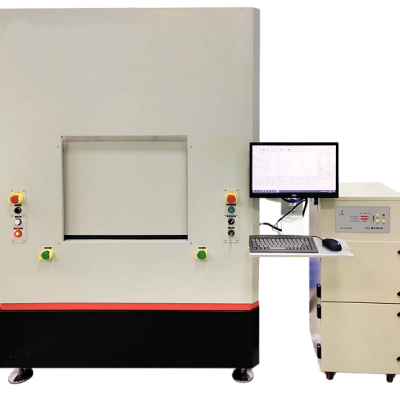 Read More

Contact Us
Recommended Products
-
 Farewell to "Stone Pain"! 1940nm Thulium Fiber Laser: A New Era of Minimally Invasive Urological TreatmentNegotiableMOQ: 10 Combos
 -
Semiconductor-Pumped Erbium Lasers: A New Benchmark for Efficient and Precise Mid-Infrared Light SourcesNegotiableMOQ: 10 Sets
-
1.5μm/2μm Laser Welding: The \"Light\" Solution for Precision Welding of Transparent PlasticsNegotiableMOQ: 1 Set
-
Five-Axis High-Precision Laser Cutting Equipment: The Ultimate Solution for Precision Processing of High-End Transparent MaterialsNegotiableMOQ: 1 Combo
-
Precision, Efficiency, and Cross-border Empowerment of 1940 nm Continuous and Quasi-Continuous Fiber LasersNegotiableMOQ: 10 Sets
-
1470&1940nm Dual-wavelength Fiber LaserNegotiableMOQ: 10 Sets
-
Unlocking New Possibilities in Medical Lasers: Technology and Applications of Flashlamp-Pumped Erbium/Holmium LasersNegotiableMOQ: 10 Pieces
-
Veterinary Thulium Fiber Laser Therapy System: 1940nm Minimally Invasive Solution for Safer Pet CareNegotiableMOQ: 10 Pieces
-
Dual-Wavelength Fiber Laser for Medical Aesthetics: 1550nm + 1927nm, Synchronous Improvement of Deep and Superficial Skin Layers in One TreatmentNegotiableMOQ: 10 Units
-
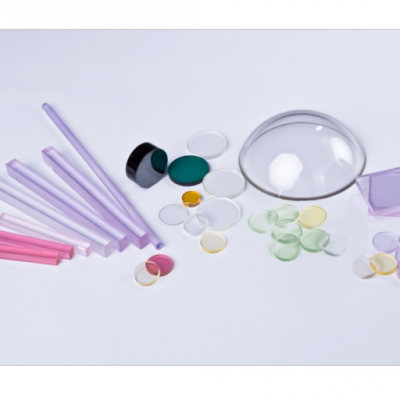
✨ Rayever | Mid-IR Laser Core Materials PortfolioNegotiableMOQ: 10 Pieces
-
1940nm Thulium Fiber Laser: Say Goodbye to Open Surgery for Your Furry FriendsNegotiableMOQ: 10 Sets
-
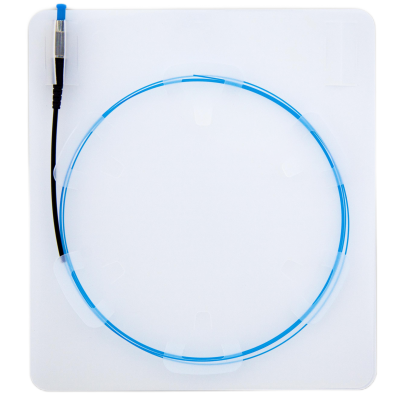
Rayever Photoelectric Medical Optical Fibers, the "Energy Lifeline" of Laser MedicineNegotiableMOQ: 100 Sets
-
YFL-2000 Portable Fiber Laser,Extreme Environment "Mobile Operations"!NegotiableMOQ: 10 Units
-
0.8~2.1μm Full Band Coverage! Rayever Photoelectric Fiber Components, Building the Core Foundation for Laser SystemsNegotiableMOQ: 100 Sets
-
Breaking Material Limits! Large-Size Broadband Transparent Ceramic WindowsNegotiableMOQ: 100 Units
-
The Versatile 1550nm Fiber Laser: A Cross-Field Powerhouse From Aesthetic Anti-Aging to Precision ManufacturingNegotiableMOQ: 1 Set
-
Medium Wave 3 ~ 8μm LaserNegotiableMOQ: 10 Sets
-
1342nm Solid-state LaserNegotiableMOQ: 1 Set
-
Fiber Optic DevicesNegotiableMOQ: 100 Sets
-
High Power Lightweight and Miniaturized 2-micron Laser ModuleNegotiableMOQ: 1 Set